Your Files Are Up There — But So Is Someone Else's Access
Every time your phone backs up automatically at 2 a.m., or you drag a folder into Dropbox, or you save a document to Google Drive, you're doing something that feels totally private. It's your stuff, going to your account, protected by your password. Simple, right?
Not exactly.
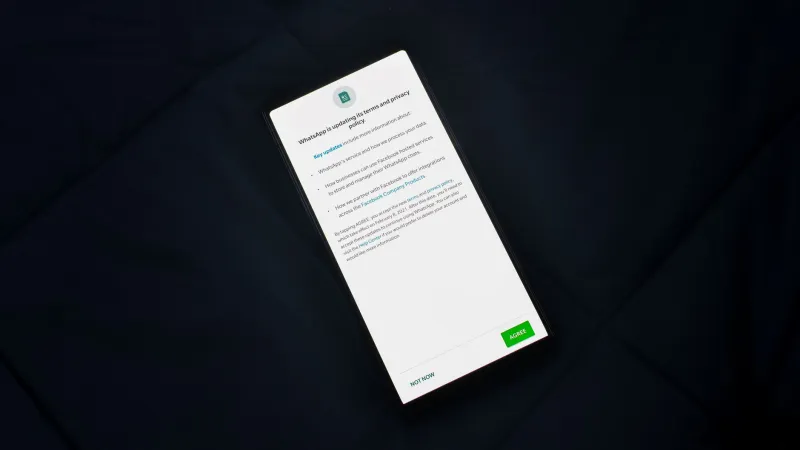
The phrase "cloud storage" does a lot of heavy lifting in the tech world. It sounds clean, neutral, even a little futuristic. What it actually means is that your files are sitting on a physical computer — a server, or more likely thousands of them — owned and operated by a company you signed a terms-of-service agreement with. That agreement, the one you scrolled past at warp speed, spells out in fairly plain (if buried) language what that company can and can't do with your data.
Spoiler: they can do quite a bit.
What 'Secure' Actually Means (And What It Doesn't)
Cloud providers love the word "secure." It shows up in ads, on product pages, and in every press release after a competitor gets hacked. But security and privacy are two very different things, and the industry tends to blur that line on purpose.
When a company says your data is "secure," they're usually talking about encryption — scrambling your files so that outside hackers can't read them during transmission or while they're sitting on a server. That part is generally true, and it matters.
What they're less eager to advertise is that many cloud services hold the encryption keys themselves. That means they can decrypt your files whenever they want or need to. You're not locking your stuff in a safe that only you can open. You're more like handing your luggage to a hotel and trusting them not to go through it.
A smaller number of services — Tresorit and SpiderOak get brought up a lot in security circles — offer what's called end-to-end or zero-knowledge encryption, where even the company can't read your files. But the big household names most Americans use? Google Drive, iCloud, Dropbox? They retain access. It's in the fine print.
The Terms Nobody Reads
Here's a fun exercise: pull up the privacy policy for whichever cloud service you use most. Grab a coffee, because you're going to be there for a while.
These documents run tens of thousands of words and are written in a way that's technically readable but practically impenetrable. Buried somewhere in there, you'll find language explaining that the company may access your content to "provide, improve, and protect" their services. That's a phrase that does a lot of work. Scanning files for malware? Sure, that fits. Training machine learning models? Arguably, that fits too. Reviewing flagged content? Yep, still fits.
Google's terms, for instance, have long included language giving them a broad license to use content you upload in connection with their services. Microsoft, Amazon, Apple — they all have variations of this. The specifics differ, but the general shape is the same: you keep ownership of your files, but you grant the company significant rights to interact with them.
None of this means someone at Google is sitting there reading your grocery lists. Automated systems do most of the work. But automated is not the same as private.
Where Your Data Actually Lives
Another thing worth knowing: "the cloud" has a physical address. Multiple addresses, actually.
Major providers run enormous data centers spread across the country and around the world. When you upload something, it might get replicated across several of those locations for redundancy — meaning your vacation photos could be sitting on servers in Virginia, Oregon, and possibly Ireland all at once.
Why does location matter? Because different countries have different laws about what governments can demand from tech companies. In the US, federal agencies can compel companies to hand over user data through court orders, national security letters, and other legal mechanisms. Some of those requests come with gag orders, meaning the company can't even tell you it happened.
The big providers publish transparency reports that give a general sense of how many government requests they receive each year. The numbers are not small. And while companies like Apple and Google have pushed back on some requests — sometimes very publicly — they comply with the vast majority.
The Business of Your Behavior
Even if a company never looks at the actual content of your files, there's another layer of information that's incredibly valuable: metadata. This is data about your data — when a file was created, how often it's accessed, what device you used, where you were when you uploaded it.
Metadata builds a surprisingly detailed picture of your life without ever touching the contents of a single document. For ad-supported platforms, that kind of behavioral information is the whole ballgame.
Google Drive is free, and Google's business model is advertising. Those two facts are not unrelated. You're not paying for the storage with money — you're paying with information that helps Google understand you better and sell more targeted ads. It's a trade plenty of people are happy to make. But it's worth knowing you're making it.
So Should You Stop Using Cloud Storage?
Probably not. The convenience is real, the backup protection is genuinely useful, and for most people, the realistic risk from any given company accessing their files is pretty low. Your old tax returns and your kid's soccer photos are not high-value intelligence.
But a few habits are worth picking up:
- Read at least the summary version of a privacy policy before signing up. Most major services now offer simplified breakdowns.
- Consider what you're actually uploading. Sensitive legal or financial documents might warrant extra caution.
- Look into zero-knowledge options if privacy is a serious concern for you. They exist, they work, and some are reasonably priced.
- Check your sharing settings. A lot of cloud storage breaches aren't sophisticated hacks — they're just files someone accidentally set to "anyone with the link."
The cloud is genuinely useful. It's also genuinely someone else's computer. Both of those things can be true at the same time, and understanding that balance is the first step toward using it a little more wisely.