Cord-Cutters Are Winning: Why Cable TV Is Losing the Battle for Your Couch
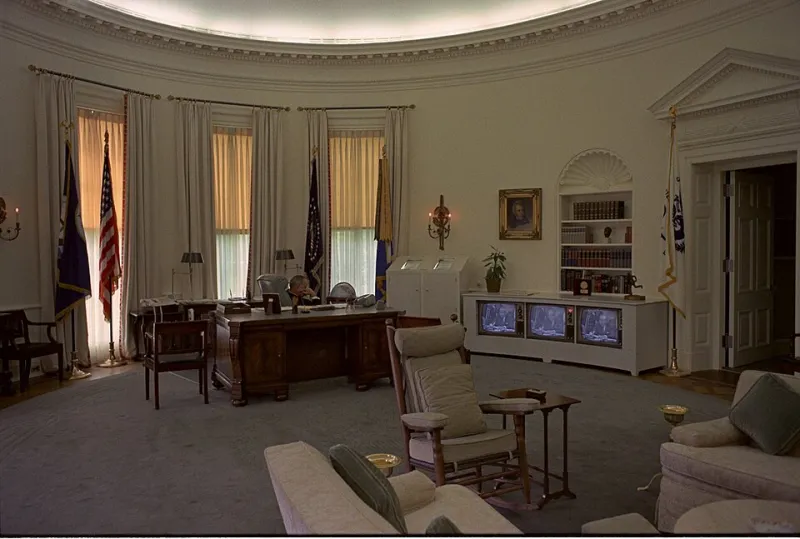
Photo: Yoichi Okamoto, Public domain, via Wikimedia Commons
Not too long ago, the idea of ditching your cable subscription felt about as realistic as growing your own food in a studio apartment. Cable was just... what you had. You paid the bill, you complained about the bill, and then you paid it again. That was the deal. But something has shifted in a big way, and 2014 might be the year historians eventually point to as the moment cable TV started losing its grip on the American living room.
Streaming services aren't just a novelty anymore. They're a legitimate threat — and cable companies are starting to sweat.
Netflix Stopped Being a DVD Company a Long Time Ago
Let's rewind just a little. Most people remember Netflix as that red-envelope-in-the-mailbox service that put Blockbuster out of business. And sure, that was impressive enough on its own. But Netflix has spent the last couple of years quietly transforming itself into something far more ambitious: a full-blown content studio.
The release of House of Cards back in 2013 was a signal flare. Here was a prestige political drama — starring Kevin Spacey, directed by David Fincher — that debuted exclusively on a streaming platform. No network. No cable channel. Just... Netflix. Critics loved it. Audiences binged it. And suddenly the conversation changed.
By 2014, Netflix has doubled down hard on original programming. Orange Is the New Black has become a genuine cultural phenomenon, the kind of show people talk about at the office on Monday morning. Marco Polo is on the way. The platform is spending hundreds of millions of dollars producing content that doesn't need to exist anywhere else. That's a power move, plain and simple.
And the subscriber numbers back it up. Netflix is sitting at over 35 million U.S. subscribers as of early 2014. That's not a niche audience. That's a massive chunk of the country choosing to spend their evenings on a $8-a-month service instead of a $100-plus cable package.
Amazon Wants a Piece of That Couch Too
Netflix isn't the only one playing this game. Amazon has been quietly building out its Prime Video library, and it's starting to get serious. If you already pay for Amazon Prime — which a lot of Americans do, mostly for the free two-day shipping — you've had access to a growing catalog of movies and TV shows without even necessarily realizing it.
But Amazon isn't content to just be a streaming bonus perk. The company launched its own original series push, and Transparent — a drama about a family whose patriarch comes out as transgender — is generating serious awards buzz heading into the end of 2014. That's the kind of cultural credibility that makes people pay attention.
Amazon is also doing something interesting with its development process, crowdsourcing audience feedback on pilot episodes before committing to full series. It's a very internet-age approach to television, and it's working.
Hulu Is Still Figuring Itself Out
Then there's Hulu, which has always occupied a slightly awkward middle ground. Originally launched as a joint venture between major broadcast networks, Hulu was supposed to be the TV industry's answer to streaming — a way to keep viewers in the ecosystem without handing all the power to a third-party platform. The problem is that Hulu has never quite committed to a clear identity.
In 2014, Hulu Plus (the paid tier) sits at around 6 million subscribers. It's got solid next-day access to current network TV, which is genuinely useful. But its original content push has been slower and less splashy than Netflix or Amazon. The platform is reportedly shopping itself around, with potential buyers showing interest, which tells you something about the uncertainty hanging over the whole operation.
Still, Hulu isn't dead. It just needs to figure out what it actually wants to be when it grows up.
So What Does This Mean for Cable?
Cable providers are watching all of this unfold and trying not to look panicked — with mixed results. The industry term is "cord-cutting," and while the numbers are still relatively modest compared to the overall cable subscriber base, the trend line is pointing in one direction and one direction only.
The traditional cable bundle — 200 channels, most of which you never watch, for a price that creeps up every year — is looking increasingly hard to justify when you can get high-quality, on-demand entertainment for a fraction of the cost. Younger viewers especially are growing up in a world where waiting for a show to air at a specific time feels genuinely weird.
Cable companies aren't just sitting still, of course. Many of them — Comcast, Time Warner, Charter — also happen to be the internet service providers that people use to stream all this content. That gives them a certain amount of leverage. There's a whole separate conversation happening right now about net neutrality and whether ISPs can throttle streaming service speeds, which would be a pretty convenient way to make Netflix look worse by comparison. That fight is still playing out.
The Living Room in 2014 and Beyond
What's fascinating about this moment is that we're watching an entire industry restructure itself in real time. The technology got good enough, the content got good enough, and the pricing gap got wide enough that a critical mass of Americans decided the cable bundle wasn't worth it anymore.
The streaming wars are just getting started. More players are likely to enter the space. HBO has already been testing a standalone streaming product internationally. Sports rights — long considered cable's ace in the hole — will eventually be the last big negotiation. When a major sports league strikes a meaningful deal with a streaming platform, that's probably the moment cable loses its last reliable argument for survival.
For now, though, the couch belongs to whoever makes the best stuff at the best price. And in 2014, that advantage is looking more and more like it belongs to the streamers.