Your Phone Has 87 Apps and You Use Six of Them
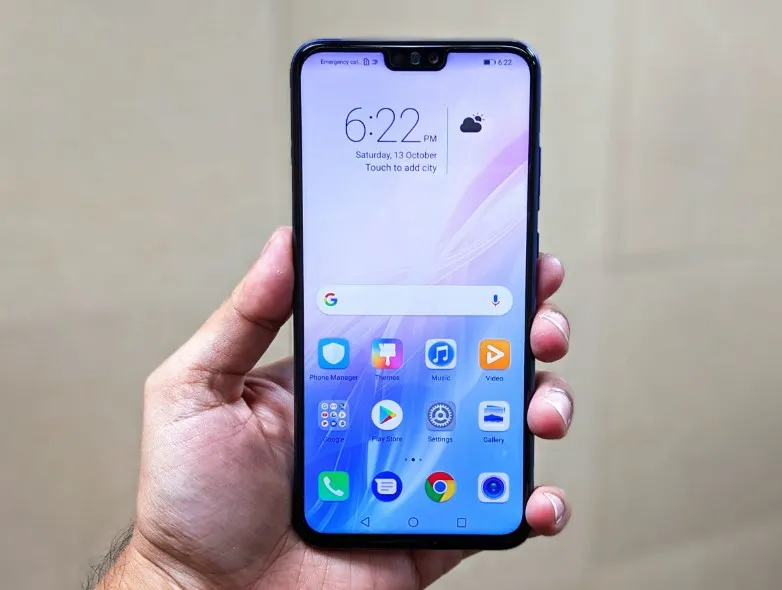
Photo: Kurdi44kurd, CC BY-SA 4.0, via Wikimedia Commons
The Home Screen Nobody Talks About
Scroll past the first page of your iPhone or Android and take a look at what's actually living on your phone right now. Somewhere in there, buried in a folder you named "Misc" six months ago, is a QR code scanner, a flashlight app (even though your phone already has one built in), a meditation timer you used twice in January, and at least one app from a restaurant that gave you a discount coupon if you downloaded it.
You are not alone. According to mobile analytics firm Flurry, the average American smartphone owner has somewhere between 26 and 40 apps installed at any given time, but regularly uses fewer than ten. That gap — between what we download and what we actually open — is the digital equivalent of a closet stuffed with clothes you haven't worn since 2011.
So why do we keep doing it?
The App Store Is Basically a Casino
Part of the answer lives in the design of the app stores themselves. Apple's App Store and Google Play are engineered to encourage browsing. The "Featured" sections, the "Free App of the Day" promotions, the endless category rabbit holes — all of it is built around the idea that discovery should feel fun and low-stakes. And when something is free (or costs $0.99), the psychological barrier to downloading it drops to almost nothing.
Dr. Larry Rosen, a psychology professor at California State University Dominguez Hills who studies technology behavior, has written extensively about what he calls "iDisorder" — the way our devices rewire our impulse control. The logic, he argues, isn't so different from grabbing a free sample at Costco. The cost feels negligible, so the decision-making part of your brain more or less checks out.
"We download things speculatively," Rosen explained in a 2013 interview. "We think, 'I might need this someday.' It's the same hoarding instinct, just applied to digital objects."
And in 2014, those digital objects are multiplying fast. Apple recently announced that its App Store crossed the one million app mark. Google Play isn't far behind. The sheer volume of available apps creates its own weird pressure — a low-grade anxiety that you might be missing something useful that everyone else already has.
The "Just In Case" Download
There's a specific category of app that almost everyone has: the "just in case" download. This is the travel currency converter you grabbed before a trip to Mexico. The parking meter app that only works in San Francisco. The calorie counter you installed during a two-week health kick in February.
These apps served a real purpose for maybe 72 hours. Now they're just taking up space, sitting quietly in a folder you never open, consuming occasional background data and silently judging you.
Mobile UX researcher Clare Rowland, who has consulted for several app development firms, says this pattern reflects something deeper about how we relate to digital tools versus physical ones. "If you buy a gadget and never use it, it sits on your counter and bothers you," she said. "A useless app is invisible. It costs you nothing emotionally to ignore it, so you never bother to delete it."
That invisibility is key. Unlike the bread maker gathering dust on your kitchen shelf, the abandoned app creates no guilt. It's just... there. Waiting.
What the Numbers Actually Look Like
ComScore released data earlier this year showing that in a given month, most smartphone users spend the overwhelming majority of their app time inside just five applications. For most Americans, that list looks something like: Facebook, YouTube, Google Maps, their phone's browser, and whatever messaging app their friends use.
Everything else — the games, the niche utilities, the brand apps, the "productivity" tools — accounts for a tiny slice of actual screen time.
Retail brands have been particularly aggressive about pushing their own apps, often dangling discounts or loyalty points as bait. But the data on retention is brutal. Research from app analytics company Localytics found that roughly 22 percent of apps are only opened once after being downloaded. One time. Then never again.
That's a staggering number when you think about the resources that went into building those apps.
Is a Digital Cleanout Worth It?
Here's a practical question: does any of this actually matter? Your phone has the storage, the apps aren't costing you money, and clearing them out takes time you probably don't have.
Maybe. But there are a few real-world reasons to consider a periodic app audit.
First, background refresh. Many apps — even ones you haven't opened in months — are quietly running in the background, checking for updates, syncing data, and eating into your battery life. On older devices especially, this adds up.
Second, privacy. Some apps request access to your location, contacts, or camera during installation, and those permissions don't expire just because you stopped using the app. A flashlight app from a sketchy developer that has access to your location data is a minor but real concern.
Third — and this one is less technical — there's something to be said for the mental clarity of a cleaner home screen. A handful of mobile productivity experts have started talking about "digital minimalism" as a concept, though it hasn't really gone mainstream yet. The basic idea is that a cluttered phone, like a cluttered desk, creates low-level cognitive noise.
So What Do You Actually Do?
If you want to take a crack at cleaning things up, the approach is pretty simple. Go through your apps folder by folder and ask one question: have I opened this in the last 30 days? If the answer is no, and you can't think of a specific upcoming reason you'll need it, delete it. You can always re-download it later — that's the whole point of having an app store.
For the stuff you're on the fence about, iOS lets you check your battery usage by app, which gives you a rough proxy for how much you're actually using something. Android has similar tools buried in the settings menu.
It's not a glamorous task. But spending 20 minutes cleaning out your phone is probably more useful than downloading the next app that promises to organize your life — which, let's be honest, you'll open twice and then forget about entirely.