How Did You Even Find Out About That Band? Discovery Before the Algorithm Took Over
Remember When Someone Just Told You About It?
There's a particular kind of memory that a lot of music fans share. You're in a car, or at a party, or flipping through a friend's CD collection, and something comes on that you've never heard before. You ask what it is. The answer changes what you listen to for the next six months.
That moment — pure, unmediated, completely accidental — is getting harder to engineer. Streaming services are increasingly built around the idea that the right algorithm can replicate it. Spotify's Discover Weekly isn't here yet, but the architecture that will power it is already being assembled. Pandora's been doing a version of this for years. Amazon knows what books you'll probably like based on what you've already bought.
But here in 2014, most Americans are still discovering new music, movies, and books the old-fashioned way. And it's worth taking a look at how that actually works — partly for nostalgia, and partly because we're probably living through the last few years where it's the dominant model.
The Pitchfork Effect (And Its Limits)
For indie music fans in particular, there's one publication that still carries enormous weight: Pitchfork. A "Best New Music" designation from the site can genuinely move the needle for an independent artist. A 9.0 review gets shared, argued about, and acted on in a way that feels increasingly rare for any single outlet.
But even Pitchfork's influence has a ceiling. Its readership skews young, coastal, and toward specific genres. Country fans aren't checking Pitchfork. Neither are most hip-hop listeners, or the huge chunk of the American music audience that just wants to know what's on the radio.
For those listeners, discovery still runs largely through traditional broadcast. Top 40 radio, for all the grief it gets from music critics, remains a genuinely powerful introduction mechanism. When a song gets heavy rotation on a major market station, millions of people hear it who would never have encountered it through any other channel. That's not nothing.
Cultural journalist Jessica Hopper, who covers the music industry, put it plainly in a recent essay: "The idea that curation is dead is a fantasy of people who already have great taste and forget how they got it. Most people still need someone to tell them what to listen to. Radio does that. Critics do that. Friends do that."
Late Night Television as a Discovery Machine
Here's one that doesn't get enough credit: late-night TV appearances are still one of the most reliable ways for an artist to break through to a mainstream American audience.
A performance on Letterman, Fallon, or Conan reaches a massive, diverse viewership in a single shot. And unlike a radio play, a TV appearance gives you the full visual presentation — the band's energy, the staging, the moment when the host says "that was incredible" and turns to the camera. It's a package deal.
This year alone, a handful of artists went from cult favorites to household names largely on the strength of a single late-night slot. The format hasn't changed much in decades, but its effectiveness as a discovery mechanism hasn't diminished either. There's something about seeing a live performance that creates a stronger memory trace than hearing a song on shuffle.
Bookstores and libraries play a similar role for books. The physical act of browsing — picking something up because the cover caught your eye, reading the back, flipping to a random page — is a discovery method that no recommendation engine has fully replicated. "Customers Also Bought" is useful, but it tends to keep you inside a taste bubble rather than pulling you out of it.
Word of Mouth Is Still King
Ask people how they found out about the last book they really loved, or the last movie they saw that genuinely surprised them. Odds are, a real human being told them about it.
Word of mouth has always been the most powerful discovery mechanism, and it hasn't lost that position. What's changed is the platform through which it travels. In 2014, a recommendation from a trusted friend is just as likely to come via a Facebook post or a text message as it is in person. The social graph has gone digital, but the underlying dynamic — "this person whose taste I trust is telling me to pay attention" — is identical.
Goodreads has turned book recommendations into a semi-social network. Letterboxd is doing something similar for film, though it's still pretty niche. These platforms work because they're essentially digitizing the trusted-friend model: you see what people you know are reading and watching, and you factor that into your own choices.
The difference between this and pure algorithmic recommendation is meaningful. When a friend recommends something, you have context. You know their taste, their history, what they hate. When an algorithm recommends something, you're trusting a black box that knows your behavior but not your judgment.
The Serendipity Gap
Here's what's genuinely at risk as personalization gets better: the accidental discovery. The song you heard because it was playing in a coffee shop. The book you picked up because it was face-out on the shelf and something about the design grabbed you. The movie you watched because it was the only thing on at midnight and you didn't feel like going to bed.
Algorithms are, by design, trying to eliminate that randomness. They want to surface the thing you're most likely to enjoy, which sounds good but also means you're increasingly unlikely to encounter something genuinely outside your established taste profile.
Some cultural observers are already worried about this. Music writer Carl Wilson has argued that the personalization of listening creates "taste silos" — environments where you hear variations on what you already like, but rarely get the jarring, unexpected experience of something that forces you to expand your frame of reference.
What Comes Next
It would be easy to be pessimistic here, but the picture isn't all bad. The tools being built right now — better recommendation engines, smarter social curation, more sophisticated taste-matching — will genuinely help a lot of people find things they love that they would never have encountered otherwise. That's real value.
The question is whether we lose something in the trade. The best discoveries are often the ones you didn't see coming. Whether a machine can ever reliably manufacture that feeling of genuine surprise is still, in 2014, an open question.
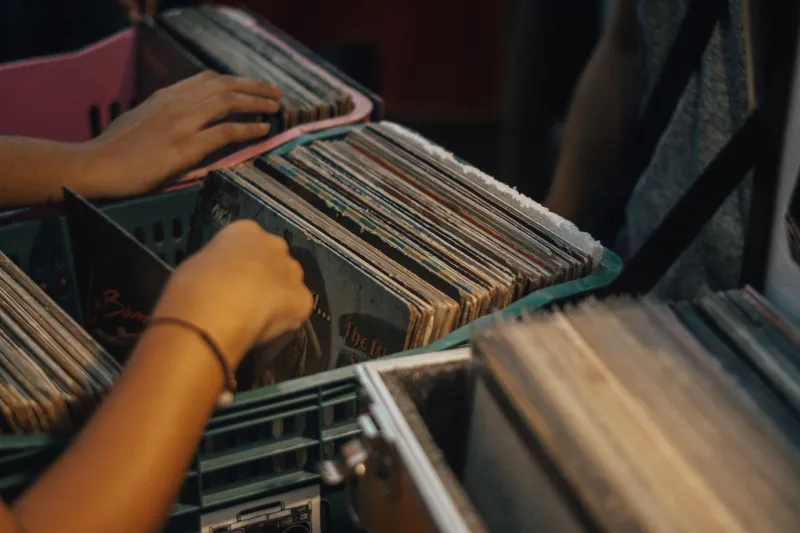
For now, though, the old methods are holding on. Ask a friend. Read a review. Watch a late-night performance with the volume up. Wander through a record store on a Saturday afternoon without a plan.
It still works. Enjoy it while it lasts.