Strike a Pose, Post, Repeat: Inside the 2014 Obsession With Going Viral
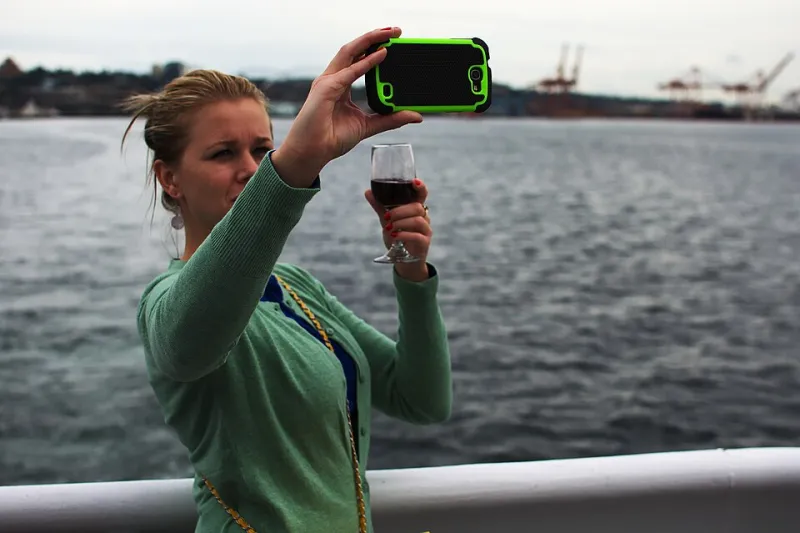
Photo: Maëlick from Charleroi, Belgium, CC BY-SA 2.0, via Wikimedia Commons
Somewhere out there right now, someone is standing at the edge of a scenic overlook, arm fully extended, phone pointed back at their own face, trying to get the angle just right before the light changes. Maybe there's a stick involved. Maybe there are three people huddled around a single device debating whether the background looks better with the mountain or without it.
This is life in 2014, and honestly? It's a little strange when you step back and look at it.
We've always wanted to document our lives. Photo albums, home movies, postcards from vacation — none of that is new. But something about the combination of smartphones, social media, and instant public feedback has shifted the whole thing into a different gear. It's not just about remembering the moment anymore. It's about performing it.
How We Got Here: A Brief and Ridiculous History
To understand where we are, it helps to trace the path. Internet culture has been producing weird viral trends for years, but the early ones felt more accidental. A funny video would get forwarded around via email. Someone would post a photo of a cat with a misspelled caption and it would somehow end up on the front page of every website for a week.
Then came planking. If you somehow missed it, planking involved lying completely flat and rigid — like a plank of wood — in increasingly unusual locations, photographing it, and posting the results online. People planked on cars, on escalator handrails, on the tops of vending machines. It was completely pointless and weirdly compelling, and for a stretch of time it felt like half the internet was horizontal.
Owling followed. Then horsemaning, which involved two people posing to make it look like one person's head had been separated from their body. The Harlem Shake arrived, briefly took over the universe, and then vanished almost overnight.
Each of these things followed roughly the same arc: a small group does it, it gets attention, everyone piles on, the media covers it, brands try to do their own version, and then it dies instantly and completely. The cycle has gotten faster every year.
Enter the Selfie Stick, Stage Left
The selfie itself has been around as long as front-facing cameras, but 2014 is the year it really crystallized as a thing — a cultural object with its own vocabulary, its own etiquette debates, and now its own dedicated hardware.
The selfie stick — a telescoping pole that holds your phone at arm's length — is either a brilliant piece of practical engineering or the most embarrassing consumer product of the decade, depending on who you ask. It solves a real problem (arms are only so long) and creates a different one (you now look like you're surveying land while waiting in line at Disney World).
Museums and concert venues have already started banning them. Travel bloggers swear by them. They've been spotted at presidential press events. The selfie stick is, in its own weird way, a perfect artifact of this moment in time: totally functional, slightly absurd, and absolutely everywhere.
The Like Button and the Validation Loop
Here's the part that's worth actually thinking about. The selfie stick and the planking photos and every other trend like them aren't really about the content itself. They're about the response.
Social platforms are built around feedback mechanisms — likes, shares, retweets, comments. That feedback triggers something real in people's brains. Researchers have been pointing to the dopamine connection for a while now, and while it's easy to roll your eyes at the neuroscience coverage, the behavioral pattern is hard to argue with. People post things, they check to see how those things are received, and they adjust their future behavior based on what got traction.
Over time, that feedback loop starts shaping what people do in the real world, not just what they post. You're not just taking a photo of your lunch because it looks good. You're thinking about whether it'll look good on Instagram. The performance starts before the camera comes out.
That's a subtle but meaningful shift in how people experience their own lives. When every moment is a potential post, you're always at least partly in the audience for your own experience.
Authenticity in the Age of the Curated Life
The backlash to all this is already visible. There's a growing conversation — especially among people in their twenties who grew up online — about the gap between the lives people show on social media and the lives they're actually living. The perfectly lit brunch photo doesn't show the argument that happened before it. The beach vacation album doesn't include the sunburn or the overpriced seafood or the hour spent getting the right shot.
Some people are pushing back by being deliberately messy online. Candid photos. Unflattering angles. Captions that admit things are hard. It's its own kind of performance, of course — performing authenticity is still performing — but it signals that people are at least aware of the artifice.
The trends that stick tend to be the ones that offer a release valve. Planking was funny partly because it was so completely pointless. There was no way to make it look aspirational. The Ice Bucket Challenge, which has been everywhere this summer, works because it's inherently a little undignified — you're getting soaked — but it's attached to something genuinely meaningful. The best viral moments tend to have that quality: they're participatory, they're a little silly, and they don't take themselves too seriously.
So What's Next
Predicting the next big trend is basically impossible, which is part of what makes internet culture so entertaining to watch. Whatever it is, it'll probably emerge from somewhere unexpected, spread faster than anyone anticipated, and be completely over before most brands figure out how to capitalize on it.
What's not going to change anytime soon is the underlying impulse. People want to connect, want to be seen, want to share what's happening in their lives. Social media just gave that impulse a megaphone and a scoreboard. The selfie stick is just the latest prop in a show that's been running for as long as people have been around.
Maybe the healthiest thing is to take the photo, put the stick away, and actually look at the view for a minute. Or don't. No judgment here — just maybe don't block the path while you're getting the shot.