Every App Wants a Piece of You: The Buzzing, Beeping Chaos Living in Your Pocket
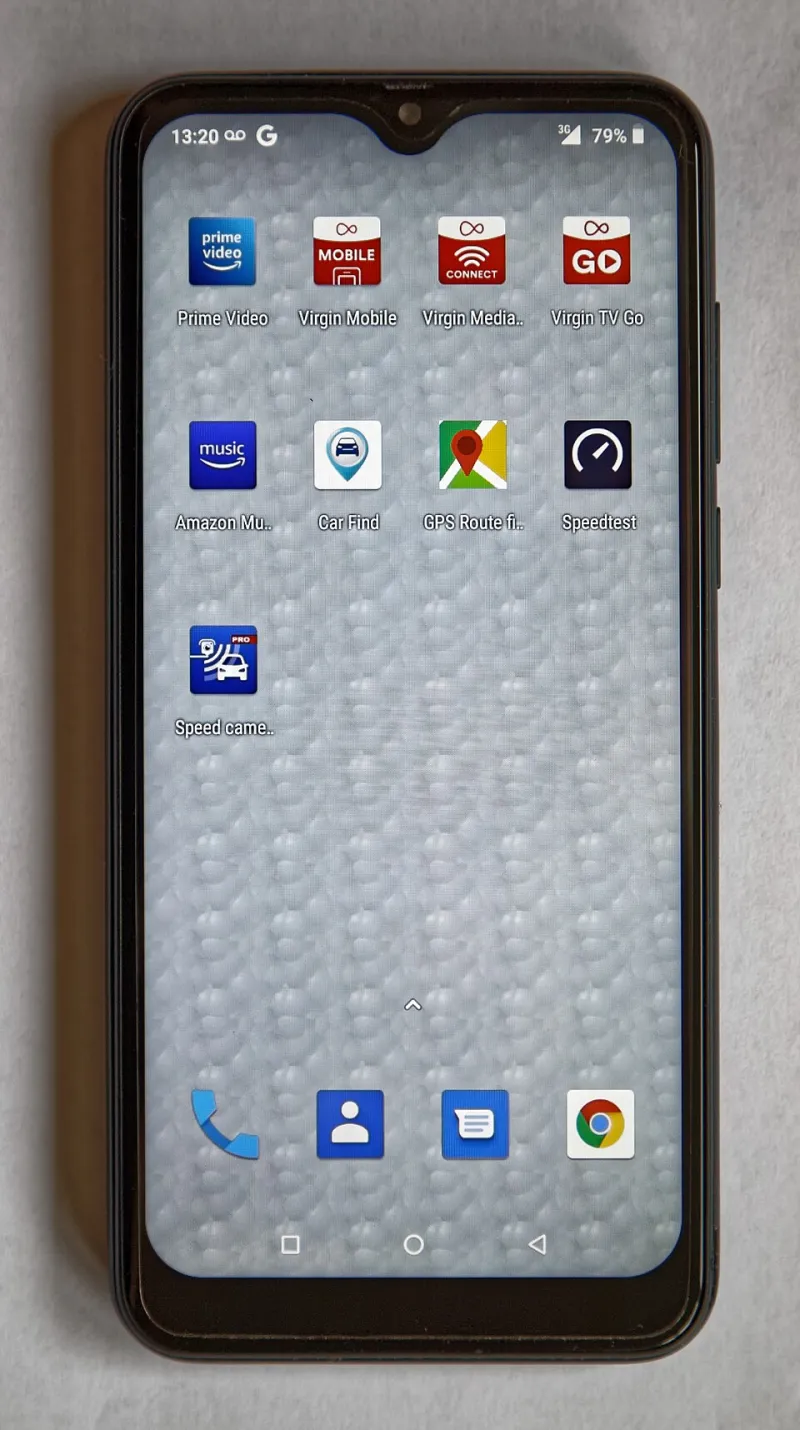
Photo: Acabashi, CC BY-SA 4.0, via Wikimedia Commons
Picture a Tuesday afternoon. You're in the middle of something — a conversation, a meal, a thought you were actually enjoying having — when your phone lights up. It's a Facebook notification. Someone liked a photo you posted three days ago. You check it. While you're there, Instagram has a badge. Then a Candy Crush life refill alert. Then a text. Then an email. Then Twitter wants to let you know that someone you follow retweeted something. Then Snapchat. Then your weather app, for reasons you have never fully understood, decides right now is the moment to tell you it's partly cloudy.
Welcome to 2014. Your phone is not a phone anymore. It's a slot machine that fits in your pocket, and every app on it is pulling the lever.
The Arms Race Nobody Asked For
Here's something worth understanding about why your phone never shuts up: every single app on your device exists within a brutal attention economy. The developers behind those apps — whether it's a scrappy startup or a billion-dollar social network — are all competing for the same finite resource: your eyeballs and the minutes in your day.
Notifications are how they fight that war. A push alert is essentially a free advertisement delivered directly to the most personal device you own. It costs the company sending it basically nothing, and if it gets you to open the app even once, that's a win for their engagement metrics. The result is that every app has a financial incentive to notify you as aggressively as it possibly can, with essentially no incentive to show restraint.
The people designing these systems are not unaware of what they're doing, either. The red badge — that little numbered circle on your app icon — is borrowed directly from the psychology of urgency. Your brain reads it as unfinished business, a loose thread that needs to be tied. Leaving a badge sitting there creates a low-grade itch. Tapping it scratches that itch. Then new badges appear. The cycle continues.
Counting the Buzzes: How Bad Is It?
A 2014 study from Informate Mobile Intelligence found that smartphone users in the US receive an average of around 63 notifications per day. Sixty-three. That's one every 15 minutes during waking hours, roughly, if you're getting a solid eight hours of sleep — which, incidentally, you probably aren't, because your phone is also buzzing at 2 a.m.
Break down where those notifications are coming from and the picture gets interesting. Social media apps — Facebook, Twitter, Instagram, Snapchat — account for a massive chunk. Messaging apps pile on. Then you've got email, which for many people arrives with a push notification for every single message, meaning that newsletter you never unsubscribed from is generating a buzz every time it lands. Games are aggressively represented too, because mobile gaming figured out early that "your lives have refilled" is an incredibly effective way to pull lapsed players back in.
The irony is that most of these notifications are, by any honest assessment, not important. They don't require action. They don't carry urgency. They're just noise dressed up as information.
What It's Doing to Your Head
Researchers have started paying serious attention to what this constant interruption does to people, and the findings aren't exactly cheerful. A study out of the University of California, Irvine, found that it takes an average of 23 minutes to fully regain focus after an interruption. Twenty-three minutes. If you're getting pinged multiple times an hour, you may be operating in a state of perpetual partial attention — never quite fully present in whatever you're actually doing.
There's also the anxiety angle. Psychologists have started using the term "nomophobia" — fear of being without your mobile phone — to describe a growing cluster of behaviors around smartphone dependency. The constant notification stream trains you to expect interruption, and when it stops, some people actually feel uneasy. The silence becomes uncomfortable. You find yourself checking your phone not because it buzzed but just to see if it might have buzzed and you missed it.
That phantom buzz sensation — feeling your phone vibrate when it hasn't — is a real phenomenon that a significant portion of smartphone users report experiencing. Your nervous system has basically been conditioned to anticipate the alert. That's not a great sign.
The Notifications People Actually Want (And the Ones They Don't)
If you ask people which notifications they'd happily delete forever, a pretty clear picture emerges. Game alerts are universally reviled — almost nobody who isn't actively playing a mobile game at this exact moment wants to be told their crops are ready or their energy has recharged. Brand and promotional notifications from retail apps score nearly as badly. Social media activity notifications — "so-and-so also commented on a post you commented on" — generate a lot of eye-rolls.
On the other hand, direct messages and texts tend to be welcomed. Calendar reminders are considered useful. Breaking news alerts — depending on who you ask and how many you're getting — occupy a middle ground.
The problem is that the apps generating the most unwanted noise are often the ones least likely to dial it back voluntarily. And while both iOS and Android give users the ability to turn off notifications on a per-app basis, the settings menus involved are buried deep enough that a lot of people either don't know the option exists or don't bother navigating to it.
Is Anyone Actually Fixing This?
Apple introduced a revamped Notification Center with iOS 7, and Android has its own notification management tools, but neither platform has made it dramatically easier to wrangle the chaos. The tools exist; the friction in using them is just high enough that most people don't bother until they're genuinely fed up.
Some apps have started experimenting with "smart" notification systems that try to learn what you actually respond to and suppress the rest. It's a nice idea. In practice, the results are mixed.
The more interesting shift might be cultural. There's a growing conversation — in tech circles and increasingly in mainstream media — about digital wellness and the cost of constant connectivity. Some people are starting to deliberately turn off notifications for entire categories of apps, or leave their phones in another room during meals, or — radical concept — put the thing on Do Not Disturb for a few hours and see what happens.
Spoiler: usually nothing catastrophic happens. The world keeps turning. The badges pile up. And when you finally check your phone again, 90% of what accumulated while you were gone turns out to have required absolutely no response whatsoever.
Maybe the real notification you need is the one nobody's sending: you don't have to answer the phone every time the phone speaks.